
Glen Hansard: Once and always a street musician

▶ Watch Video: From the archives: “Once” songwriter Glen Hansard

(CBS News) The 2007 movie “Once” is now a Broadway musical . . . giving fans a whole new chance to hear its Oscar-winning song once again. It was co-written by Glen Hansard who talked to Anthony Mason . . .

Glen Hansard has been a street musician since he was 13. He started playing Dublin street corners . . . just him and his guitar.

“New York’s a funny city to busk in because, you know, there so much noise,” he told Mason. “It’s everywhere. It’s a really noisy town!”

“You’ve played right through it, literally,” Mason said.

“But, yeah, that’s busking,” Hansard said. “That’s the shape of your strum.”

He learned how to project his voice and draw a crowd. But it was nothing like the attention he would get from “Once.” The low-budget Irish film, in which Hansard starred as a busker, became an unexpected international hit in 2007.

And “Falling Slowly,” the song Hansard wrote with his co-star Markita Irglova, won them an Oscar.

“It took us three weeks to make, we made it for a hundred grand,” Hansard effused in his acceptance speech. “We never thought we’d come into a room like this and be in front of you people.”

Glen Hansard

Glen Hansard

27 photos

He told Mason, “When we won that award, it was just, like, the most amazing thing. And then my thing was like, “Okay, thanks, Now let’s get on with our lives. And then when there was talk of it going to Broadway, I remember being very nervous, and honestly I was against it.”

“You didn’t want a Broadway musical?” Mason asked.

“No,” he said. “For me, Broadway meant sort of hamming it up. ‘Course, you’re tempted by the idea of people saying, whispering in your ear, going, ‘Do you know if this does well, like, you’re gonna be seriously rich?’ And going like, ‘That was never why we did this.'”

Hansard relented. And the musical “Once” last year won 8 Tony Awards.

“They did treat it with grace,” he said. “They did treat it with respect. They did get the right people.”
Hansard_wide_141590819.jpg
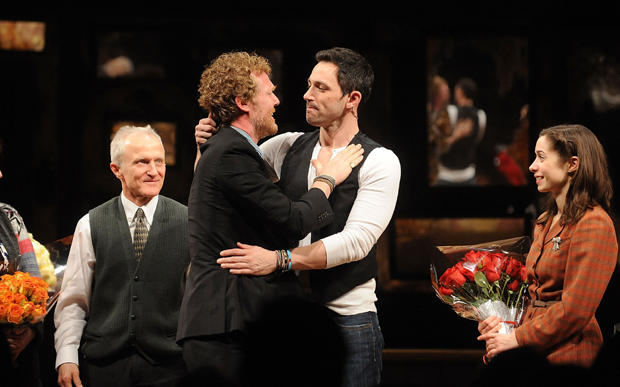
Glen Hansard and Steve Kazee on stage at the Broadway opening of the musical “Once,” based on the film, at the Bernard B. Jacobs Theatre on March 18, 2012 in New York City. The show went on to win eight Tony Awards, including Best Musical.

Brad Barket/Getty Images

Hansard lives in a rented cottage on an estate outside Dublin. He took Mason to a Dublin pub to share a pint with Frankie Byrne, Hansard’s former grade school principal, who told him it was okay to quit school at 13 to pursue music.

“So for me, that was just, you know, the wings I needed,” Hansard said. “So I went home, and basically announced to ma, ‘Listen, it’s okay. Frankie told me it’s okay!'”

“Yeah, he got permission,” Byrne laughed. “One of my proudest moments in my dereliction of duty, you know.”

Hansard still knows most of the street musicians in the city.

“Mary’s here every single day, and she’s a great busker,” he said of one.

The singer who used to play on Grafton Street showed Mason his spot, where he’d busk during the day, then come back after the pubs closed at night:

“Are people more generous when they’re drunk?” asked Mason.

“That’s the thing — it’s a tougher gig, but you make more money,” said Hansard. “Everyone’s drunk!”

He added, “It’s a lot more dangerous.”

Web Exclusive video: To watch Glen Hansard busking on Manhattan streets and in a Bleecker Street record shop, click on the video player below, as he performs “Love Don’t Keep Me Waiting.”

At 18 he formed a band called The Frames. One video, made on a post office security camera for less than $5, was picked by up MTV. Then one of his former band mates asked him to help with a small film he was making.

During filming Hansard fell in love with Marketa Irglova, his friend and costar who was 18 years younger.

Of the sleeper success of “Once,” which put him — and his romance with Irglova — in the spotlight in a way he’d never been before,” Hansard said, “It didn’t help us all.

“I think part of what made ‘Once’ on the screen kind of work was that there was always this energy between us,” he said. “You’d be a fool to deny it.”

They would form a band, The Swell Season, and tour together. They continued to tour even after breaking up.

“That must have been hard,” said Mason.

“It was hard, and it was something we addressed all the time,” Hansard said. “It was like, ‘Are you still enjoying this?’

“If you said to me, you could have all this success or you could just have a great relationship with Mar, I’d have took the relationship,” he continued, “because it was the most profound and beautiful thing I had been through.”

Hansard’s first solo album, “Rhythm and Repose,” is about putting that behind him — and about his family. “It’s all there. It’s all on the record,” he said.

He grew with an alcoholic father who physically abused his mother.

“At a very early age, I kind of learned this pattern — whenever something good happens, something bad follows immediately,'” he said. “And we spent a lot of our childhood in aunts’ houses, in battered wives’ homes, in long periods of, like, living in a dorm, away from him.”

Hansard says he wrote the song “Bird of Sorrow” about his mother:

You been kneelin’ in the dark for far too long
You’ve been waitin’ for that spark, but it hasn’t come
Well I’m callin’ to you, please, get off the floor
A good heart will find you again
A good heart will find you, just be ready then.

Tethered to a bird of sorrow
A voice that’s buried in the hollow
You’ve given over to self-deceivin’
Your prostrate bowed would not be leavin’
You’ve squandered more than you could borrow
You’ve bet your joys on all tomorrows
For the hope of some returnin’
While everything around just burnin’.

“‘Tethered to a bird of sorrow’ means a few things in my head when I sing it,” Hansard explained. “It’s us, me and my brother. . . . It was just one of those situations where growing up, it’s a funny thing to feel more like an adult than your parents when you’re a kid.”

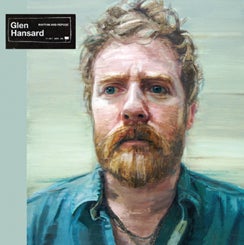
Glen Hansard’s first solo studio album, “Rhythm and Repose.”
rhythmrepose_244.jpg
Glen Hansard’s first solo studio album, “Rhythm and Repose.”

ANTI Records

He took his mother to the Academy Awards and gave her his Oscar. She keeps it at her bedside. Glen Hansard is one of Ireland’s most highly-regarded musicians now. And the past few years, over Christmas, he’s returned to Dublin to busk for charity with other Irish artists, like Sinead O’Connor and Bono.

Mason said, “I get the sense just in walking around with you in New York and in Ireland, that you’ll always be at home playing a guitar on the street.”

“Yeah, you’re never more than a step away from it,” Hansard said.

“You can climb all the levels of success and of celebrity or fame. But you’re never more than a step away from the guy who’s just making his money for the day.”

For more info:

Unpaid wages and deadly risk: Why health workers are threatening to abandon the Ebola response

(CNN) — Every morning, Micheline Kayimpa pulls on layers of protective gear before stepping into an Ebola isolation ward in eastern Democratic Republic of Congo (DRC), knowing that one small mistake could cost her life.At the Elikya Ebola Treatment Center in Bunia, the nurse spends her days caring for patients infected with Ebola — one of the world’s deadliest viruses — administering medicine and assisting those too weak to feed themselves.Because Ebola spreads through bodily fluids, even routine care exposes health workers to constant risk — from treating patients to cleaning contaminated spaces.“I am very afraid for my safety,” Kayimpa told CNN. “Sometimes, a small detail we overlook can prove fatal.”But as the outbreak grows at an alarming pace, health workers say they are battling more than the virus.After months of treating Ebola patients, Kayimpa says she has yet to receive a single government paycheck. The mother-of-four is among dozens of health workers who have protested delayed wages and threatened to boycott work.The timing couldn’t be worse.Kayimpa is working on the front line of what the World Health Organization says is now “the largest Ebola outbreak ever reported” in the DRC. Since the virus emerged in mid-May, it has infected at least 3,874 people and killed 1,751, according to figures released Wednesday by the Congolese health ministry.The outbreak was jointly detected in both the DRC and neighboring Uganda. While Uganda has since declared itself Ebola-free, transmission has continued to accelerate in eastern Congo.The flare-up has reached that scale in just over two months, surpassing the country’s last major Ebola epidemic, which spanned nearly two years between August 2018 and June 2020. Only the 2014–16 Ebola epidemic in West Africa has been larger and deadlier, infecting more than 28,600 people and killing 11,325 across Guinea, Sierra Leone and Liberia.Deep mistrust fuels hostilityBunia, where Kayimpa works, is the capital of northeastern Ituri province, the epicenter of the outbreak, where more than 90% of confirmed cases have been recorded. The response is already struggling to keep pace even without the threat of healthcare workers walking out in protest.Unlike previous Ebola outbreaks, this one is caused by the less common Bundibugyo strain, for which there are no proven vaccines and treatment options remain limited. Ongoing fighting in eastern DRC has also made it harder for health workers to reach affected communities.“This outbreak took hold in communities already worn down by conflict and displacement, with weak health, water and sanitation systems to begin with,” said Lancelot Mermet, director of humanitarian programs at Mercy Corps.“When people can’t get to care quickly, or don’t trust the system enough to come forward, the virus moves faster,” he told CNN, adding that health officials are still identifying cases that cannot be linked to known infections.Aid agencies say mistrust, misinformation about Ebola, and resistance to restrictions on traditional burial practices have fueled hostility toward health workers and complicated efforts to contain the outbreak.That hostility erupted into full view in late May, when demonstrators seeking the bodies of two relatives forced their way into an Ebola treatment facility. It was the third such attack since the outbreak began, forcing health workers to move patients to safety as gunfire erupted nearby.The violence has continued. Similar attacks were reported in June and July, and the United Nations said last month that “at least a dozen facilities have been attacked, largely due to fear, misinformation and deep community mistrust of outside authorities.”‘We’re sacrificing our lives’Inside Bunia’s Elikya Ebola Treatment Center, the response is stretched thin.The 90-bed isolation ward, run by international humanitarian organization Médecins Sans Frontières (Doctors Without Borders, or MSF), is already operating at full capacity, with many patients arriving only after they are critically ill.“We do not have enough staff,” Kayimpa said. “There are just two or three of us nurses looking after patients with more than 10 different conditions.”Even with protective equipment, the danger never disappears.“Accidents can happen whilst I’m working here,” she said. “Some aggressive patients may attack you and infect you. We’re sacrificing our lives for the people.”Health care workers already paid a heavy price in the early days of the outbreak, she said.“When the disease first broke out, we didn’t know it was Ebola,” she recalled. “We were treating patients without any protection. Many of us became infected, and some died.”Despite those risks, Kayimpa says it isn’t the virus that has pushed many health workers to breaking point.MSF provides bonuses, she said, but those payments do not replace the government wages she relies on.“I’ve been working here since June, but I haven’t received a single penny in wages,” she said, adding that her name was misspelled on payroll records. “I was told that processing my file would take a long time.”She stopped work for three days in protest, she said, but has since resumed in the hope her case will be resolved. If there’s no progress, however, Kayimpa – who worked for a private health organization in Bunia before joining the Ebola effort – is ready to walk out again.It remains unclear whether the delays are linked to broader funding pressures affecting the response.DRC communications minister Patrick Muyaya Katembwe acknowledged that delayed payments had triggered staff protests at several Ebola treatment centers but told CNN the outstanding payments were now being processed.He said the delays were largely caused by the administrative process of verifying which workers had been deployed to the Ebola response and ensuring payments reached the correct recipients.“Anyone officially listed will be paid,” he said.MSF, which runs several Ebola treatment and isolation facilities across the DRC, said the protests were related to government compensation rather than payments from the humanitarian organization.“MSF is continuing to meet its obligations towards staff working in the response,” it said in a statement to CNN, adding that “health workers play an essential role in responding to this outbreak, and it is important that they receive compensation in a timely manner for their work under extremely challenging conditions.”‘Chasing a wildfire from behind’Aid workers say the success of the Ebola response depends on the people risking their lives to keep it running.“These are the people carrying the greatest burden of the outbreak, caring for and treating patients, preventing infections and holding together public confidence in the health system, all while taking significant risks themselves,” an aid worker familiar with the response told CNN.He said, “With this outbreak moving this fast and spreading further from the epicenter, frontline workers need the equipment, protection, timely payment and support required to do their jobs safely.“Every interruption gives the virus more time to spread and leaves the response chasing a wildfire from behind,” the aid worker added.Whether health workers like Kayimpa receive that support could determine how many remain on the front line, fighting to keep patients alive and contain the virus.“As long as I don’t receive my wages, I will boycott work until I’m paid,” she said. “Better still, I will leave this job to try my hand at other activities that will bring me money.”The-CNN-Wire™ & © 2026 Cable News Network, Inc., a Warner Bros. Discovery Company. All rights reserved.
Read Next Story