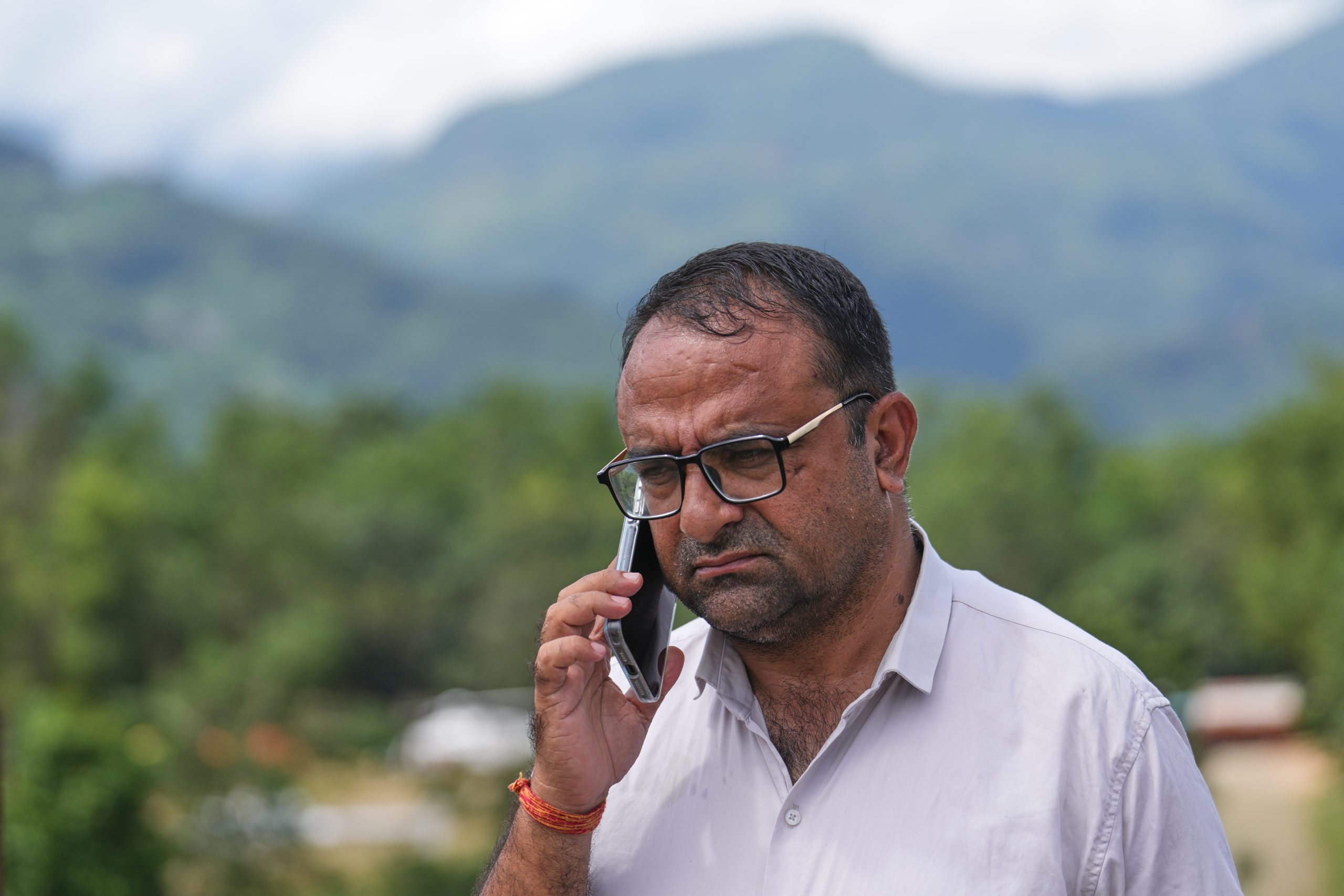
IDLIB, Syria (AP) — Idris al-Ridah wept as he carried the lifeless body of his 6-year-old son Amir, wrapped in a yellow and brown blanket, in northwest Syria.
The father collapsed to the ground as he laid his son to rest, his small body lowered into a grave next to two other young children who were siblings, Aya al-Fankih, 4, and Rayan al-Fankih, 6.
The three children were killed on Thursday in the village of Abu Habbah, in the countryside in the northwestern province of Idlib, when a land mine left behind from Syria’s war exploded while they were playing near a well.
The deaths are the latest reminder of the dangers posed by unexploded war remnants scattered across the country years after the conflict began.
Mines and booby traps have killed and maimed hundreds of Syrians since Syria’s conflict began in March 2011, leaving about half a million people dead.
The Syrian Civil Defense said four other children who were near the well were also wounded in the blast.
“We heard a very loud explosion next to our house,” one resident, Mahmoud al-Aleiwi. He added that “when we got to the location there were a number of children’s bodies thrown around the well.”
He said one of the children was thrown 300 meters (984 feet) away by the explosion and was found on the roof of a house.
At a nearby hospital, wounded children cried as family members tended to them. One child had shrapnel wounds across his face and body, his legs wrapped in bandages. Another lay in bed with blood visible through bandages wrapped around his head.
Ten-year-old Ibrahim al-Suwadi was injured last month in a separate explosion caused by unexploded ordnance inside a damaged school in the town of al-Habit in Idlib’s southern countryside.
Sitting beside his father inside their home, al-Suwadi described how he was playing with his friends at the school when they went inside a room and found the mine.
“Two brothers picked it up and took it to the bathroom,” the boy said. “We thought it was an exploded mine so we started throwing rocks at it. All of a sudden, an older boy grabbed my hand and we ran, the mine exploded and I lost consciousness then I don’t remember anything.”
His father said the family had fled their village in 2013 during fighting and spent years living in displacement camps before returning after the fall of Bashar Assad’s government in December 2024.
Humanitarian organizations say unexploded ordnance remains one of the deadliest legacies of Syria’s war.
“Syria has ranked among the top contaminated countries around the world over the past years,” said Jakub Valenta, head of humanitarian disarmament and peace building for the Danish Refugee Council in Syria. He added that according to the data from the United Nations, around 14.3 million people are in danger of explosive ordnance in the country.
Valenta said the explosive hazards include anti-personnel mines, anti-tank mines and other unexploded devices left behind in residential and agricultural areas.
“We’re estimating that around 1,200 people and probably more have been affected by explosive ordnance accidents directly,” he said. “Out of those 1,200 people there were around 740 fatal casualties. The vast majority of these people are men and children.”
According to the Danish Refugee Council, around 60% of contaminated areas in Syria are agricultural lands, complicating efforts by displaced families to return home and rebuild livelihoods.
In Damascus’ southern suburb of Kisweh earlier this month, Syrian trainees working with Danish Refugee Council teams carefully removed and destroyed unexploded ordnance during training exercises aimed at expanding local demining capacity.
The organization says it has recruited and trained new Syrian explosive ordnance disposal teams to help clear contaminated areas and educate communities about the risks.
“The number of the casualties is among the highest worldwide in terms of explosive accidents and victims,” Valenta said.
“These people suffer lifelong injuries, physical like losing a limb or their vision and suffer mental health problems,” he said. “These people also lose their jobs and livelihoods.”
__
Harb reported from Beirut