Now comes even more frigid weather in the U.S. Midwest.
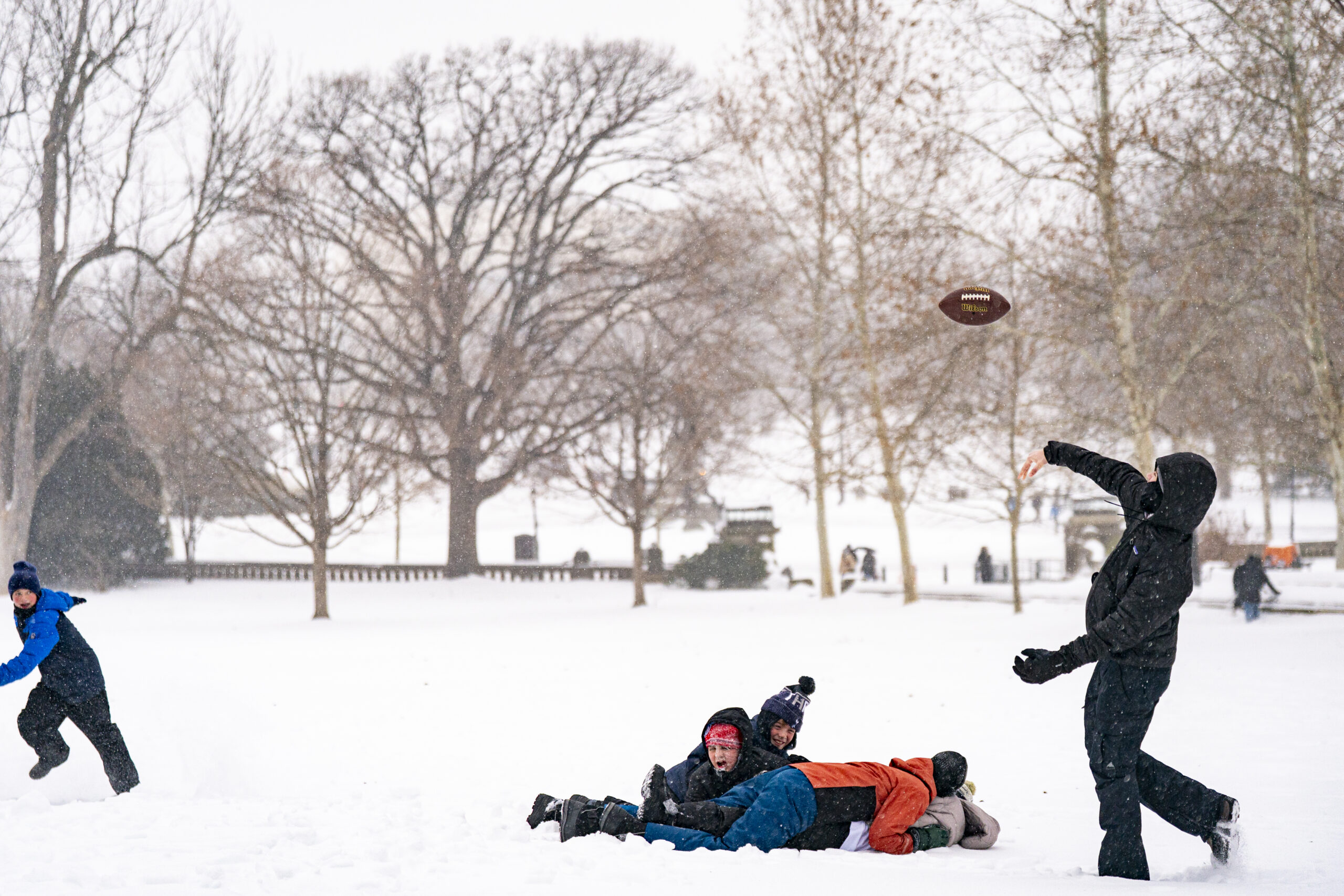
Extreme cold with near-zero degree wind chills descended upon parts of Iowa, Nebraska, Minnesota and Wisconsin, forecasters said Tuesday, even as utilities worked to restore power to thousands of customers after heavy snow and strong winds pummeled parts of the Midwest, Great Lakes and the Northeast this week.
The cold front follows a system that barreled across the Midwest and parts of the Great Lakes with strong winds and a mix of snow, ice and rain. Forecasters said it intensified quickly enough to meet the criteria of a bomb cyclone, a system that strengthens rapidly as pressure drops.
Nick Korstad, who lives in the Big Bay Point Lighthouse on Michigan’s Upper Peninsula and Lake Superior, called the storm the strongest he has seen since he moved there in 2018, with gusts up to 75 mph (121 kph) rattling the house as waves pounded the cliffs below. The storm knocked out power for about 40 hours, darkening the lighthouse beacon and forcing him to rely on oil lamps and fireplaces.
“When winds reach this magnitude, the entire house rumbles, the windows flex and you can feel the pounding of the waves against the sandstone cliff,” Korstad said Tuesday.
Wisconsin’s forested Northwoods region will see temperatures drop as low as minus 10 degrees Fahrenheit (minus 23 degrees Celsius), said Cameron Miller, a National Weather Service meteorologist in Wisconsin.
“On New Year’s Eve wind chills could be down to the negative 20-25 degree (minus 29-minus 32 degrees Celsius) range there,” Miller added.
Nationwide, about 60,000 customers were without power Tuesday.
Frigid air will spread across much of the eastern two-thirds of the country, the weather service said, powering the lake-effect “snow machine” in areas downwind of the Great Lakes.
In New Jersey, an animal shelter scrambled to line up foster homes for at least 30 dogs after snow damage to some of its kennels. Snow from a weekend storm apparently tumbled from a neighboring roof onto roofing that covered rear sections for some of the roughly 125 kennels at the Associated Humane Societies’ shelter in Newark, social media manager Olivia Gonzalez said.
Repairs can’t begin until the animals move elsewhere. “We definitely need to band together and move these dogs out of this building as quickly as possible,” she said. After a social media appeal, two dogs were settled in foster households, though six new stray dogs came into the shelter, Gonzalez said.
Snow totals in parts of western and upstate New York could reach up to 3 feet (0.9 meters) this week, forecasters said. Strong winds on Monday knocked down trees and power lines across the region.
Video posted on social media showed people struggling to walk in the wind. Just south of Buffalo in Lackawanna, Diane Miller was blown off the front steps of her daughter’s house and landed in some bushes. She wasn’t seriously hurt.
“I opened her door and the wind caught me, and I went flying,” Miller told WKBW-TV.
On the West Coast, strong Santa Ana winds with isolated gusts topping 70 mph (112 kph) brought down trees in parts of Southern California where recent storms had saturated the soil. With more rain expected, LA County issued evacuation warnings to go into effect Wednesday for residents near burn scars left by this year’s devastating wildfires. Law enforcement went door-to-door telling residents to be prepared to leave if ordered to do so.
Rain on New Year’s Day could potentially soak the Rose Parade in Pasadena for the first time in about two decades.
Extreme winds hampered an air rescue attempt on Monday in mountains east of Los Angeles where three hikers were found dead.
Cold is the norm this time of year in Alaska — but it’s been “unusually cold for unusually long for December” in Fairbanks, said weather service meteorologist Jacob Troyke. Temperature readings late this month have plunged as low as minus 48 degrees Fahrenheit (minus 44.4 degrees Celsius). Extreme cold and the potential for ice fog prompted sponsors to postpone a New Year’s Eve fireworks show hosted by the University of Alaska Fairbanks, the university said.
Road crews have struggled to keep up with the snow in Juneau, Alaska’s capital. The city shattered a December monthly snowfall record of 54.7 inches (1.4 meters) set in 1964, receiving more than 63 inches (1.6 meters) so far.
___
Associated Press writers Corey Williams in Detroit; Jeff Martin in Kennesaw, Georgia; Chris Weber and Jaimie Ding in Los Angeles; Becky Bohrer in Juneau, Alaska; and Jennifer Peltz in New York contributed to this report.