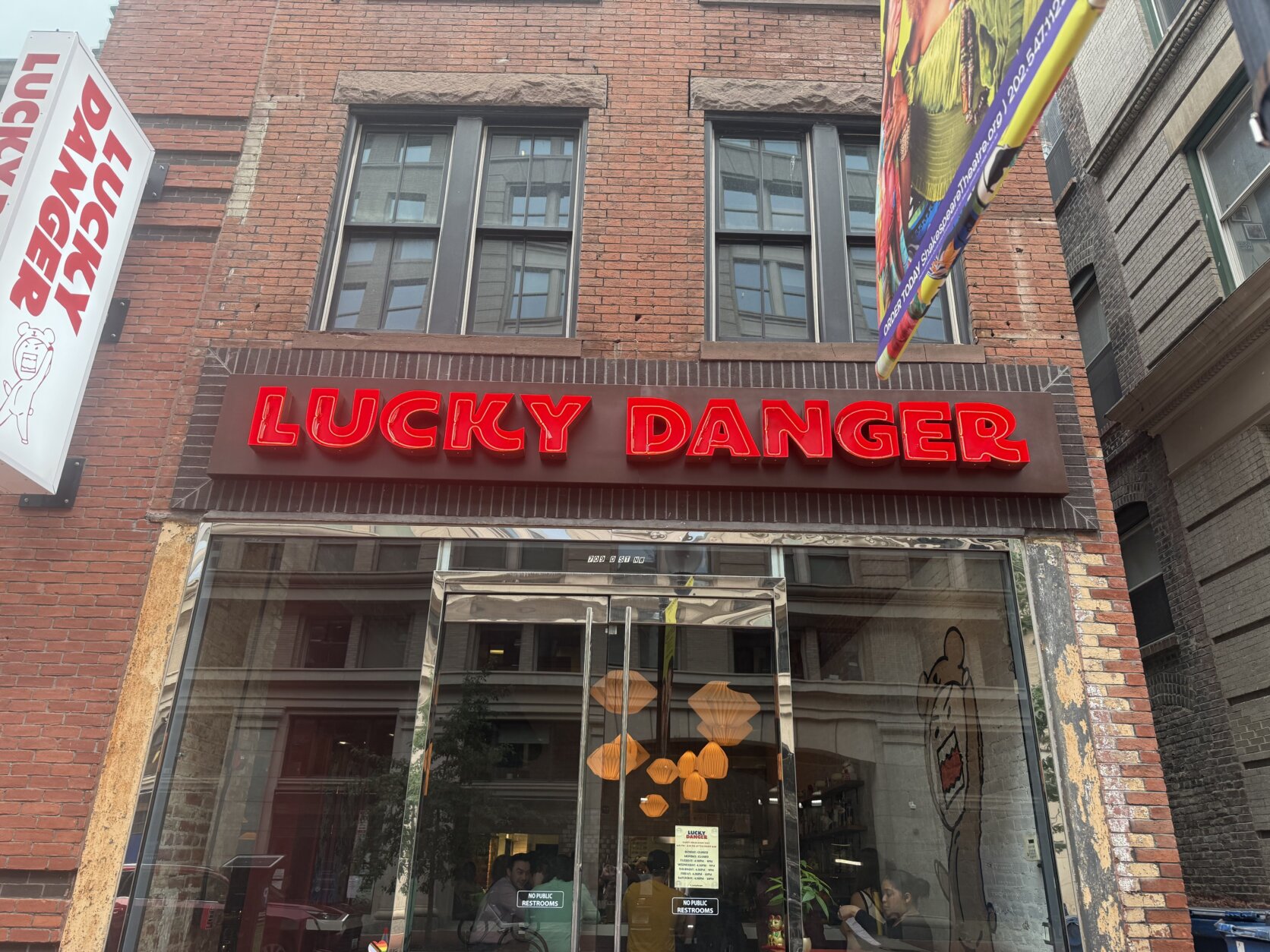
Asian spirits, from Korean gin to Japanese whiskey, are becoming staples on DC drink menus

All throughout May, WTOP is celebrating Asian American and Pacific Islander Heritage Month with stories about the people and places shaping the D.C. region.

What connects whiskey with DC's famous cherry trees?

Cooking techniques and ingredients give Asian cuisines their distinct and regional flavors, and the same holds true for their alcoholic beverages.

At D.C.’s Moon Rabbit restaurant in Northwest D.C., the Asian-focused cocktail menu draws on ingredients and techniques specific to the regions of the continent.

With the botanical earth and spice in Asia, there’s a wide range of variety to make into different flavors,” said Thi Nguyen, the restaurant’s award-winning bar director. “The playing field is a little bit more open and more free for people to create their own gin.”

Moon Rabbit, which received a Michelin award for an exceptional cocktail program in 2024, carries Vietnamese, Indian and Korean gins, which feature fruits, such as longan, rambutan, jackfruit and dragon fruit.

One of the herbs Moon Rabbit uses in its cocktails is “culantro.”

“Almost like cilantro, but a little bit more spice into it … a very distinct spice note,” Nguyen said.

She said people often describe cilantro as soapy, but culantro is different.

It’s “minty and has a little kick into it,” Nguyen said, adding that culantro is long leaf with spiky edges, while cilantro has short leaves.

Moon Rabbit’s take on a gin gimlet was inspired by an Asian cucumber salad, featuring a mix of lime juice, ginger syrup and a cucumber-infused Indian gin. It’s shaken and garnished with a few drops of sesame oil that float on top.

“A very summer drink,” Nguyen said.

While at most bars, you tell the bartender what you’d like to drink, Nguyen said her customers tend to defer to the bartenders when it comes to what kind of libations to imbibe.

“They tend to do more like a bartender choice, where they just tell the bartender what they’re looking for and then the bartender would make it for them,” she said.

Experimenting with shōchū 

A similar cultural norm exists in Japan. Honkaku Spirits founder Christopher Pellegrini is a Japan-based expert in shochu, Awamori and other koji spirits. Koji is a type of mold that is used in traditional Japanese fermentation that creates “umami-laden spirits with a character unique to Japan,” according to the importing company’s website.

Pellegrini said in Japan, you’re likely to have canned beverages or a single bottle of a spirit at home, but not much more than that.

“There’s not really a reason to have a big spirits cabinet in your home,” he said. “You’re not going to have dinner parties that you need to entertain in most cases. Most people meet out at a restaurant or a bar when they’re socializing.”

In terms of what people in Japan are drinking when they’re out, Pellegrini said shochu is a category unlike anything most American drinkers have tried. Shochu — not to be confused with soju from South Korea — is softer than most spirits in terms of alcohol volume, and it’s made in a variety of different ways.

It’s usually bottled at 25% ABV, Pellegrini said. Most Awamori, another Japanese spirit, is at 30%. It’s usually served with meals rather than being consumed as a standalone drink.

“They just never really do them in isolation. If there’s food on the table, then there may be drinks,” Pellegrini said. “If there are drinks, then there will also be food on the table.”

In Japan, shochu outsells sake, he said, and if you weren’t aware of that, you shouldn’t be surprised. Pellegrini said less than one-tenth of 1% of shochu production ever leaves Japan, compared with about two-thirds of mezcal and tequila production leaving Mexico.

But shochu and Awamori are showing up increasingly in cocktail bars in the U.S. Pellegrini predicted they will be “one of the next big things internationally.”

“They use a variety of different food stuffs to make sweet potato shochu, barley shochu, rice shochu, Kokuto sugar shochu and many other styles,” Pellegrini said. “There are 53 approved styles in Japan today. It is the most diverse spirits category in the world.”

Part of the appeal for bars, he said, is practical: Shochu carries no additives and is what Pellegrini called “the lowest calorie spirit in the world.”

What connects whiskey with DC’s famous cherry trees?

Japanese whiskey, a centuries-old tradition, has a connection to the nation’s capital.

Jokichi Takamine, a Japanese chemist, patented a process for producing a maltless whiskey in Illinois in the 1890s, Pellegrini said.

Takamine licensed the process to the Illinois Whiskey Trust, which planned to switch from malted grains to a Japanese fermentation style using kōji mold — the same mold used to make miso and soy sauce.

“He was nearly successful at changing American fermentation and American whiskey,” Pellegrini said.

Legal disputes and suspicious destruction of some of his equipment put an end to that, however. Takamine moved his family to Harlem, New York, where he later isolated medical adrenaline — epinephrine — the precursor to the EpiPen, Pellegrini said.

Takamine used his earnings from those patents toward philanthropic measures. He helped facilitate the donation of thousands of cherry trees on behalf of Japan to D.C. — the same ones you see today on the Tidal Basin.

This year’s National Cherry Blossom Festival, which marked America’s 250th anniversary, included a donation of 250 more cherry blossom saplings to D.C. — continuing a tradition that traces back to Takamine’s original 1912 gift, Pellegrini said. The Takamine Koji Whiskey brand was a sponsor of the festival this year.

Pellegrini said he and a colleague approached Takamine’s family in Japan and asked if they could revive the koji whiskey in his name and the family agreed.

“So much of the Japanese tradition of making whiskey, which is only 100 years old, is based on the Scotch tradition,” Pellegrini said. “This is made in Japan, but there’s no malted grains in it. It’s kojified grains. It’s barley that has had koji propagated onto it. It somehow runs a little sweeter.”

He described it as “a bridge between Japan and America, much like Dr. Takamine was back in his day.”

An 8-year-old koji whiskey, he said, “feels older when tasted — like it’s 15 years old.”

When you have advanced prostate cancer: What living with the disease looks like

(CNN) — “How long do I have to live ?”When I tell a patient he has prostate cancer, this is usually what he asks me first.With early-stage or low-grade prostate cancer, I can offer strong reassurance: Your life expectancy is good — expect a five-year relative survival rate of greater than 99% with treatment. Simply put, most men will not die from low-grade prostate cancer.However, once the cancer has spread outside the prostate to the bones and other organs the answer becomes more difficult. Treatment has changed dramatically over the past decade for advanced prostate cancer. New drugs, better imaging and the earlier use of combined therapies are helping men live longer.In a video released July 15, former President Joe Biden gave an update on his prostate cancer, saying he was receiving treatments that have been going well. In May 2025, Biden officially announced that he had an aggressive form of prostate cancer that had spread to his bones. Since then, based on official updates, he has continued hormone therapy, completed a course of radiation and maintained a public presence.His diagnosis brought renewed attention to prostate cancer screening and treatment. Now, more than a year later, his cancer journey offers an opportunity to examine what has changed in the treatment of advanced prostate cancer — and the hope these offer men living with the disease.I recently saw a patient who was diagnosed three years ago with cancer that had already spread to multiple areas in his bones. Since then, he has taken cruises, traveled with his family and spent weekends babysitting his grandchildren.He gets tired and cannot garden the way he once did. But he is still alive and considers every day a blessing. His experience, and what we see with Biden, shows what living with metastatic prostate cancer can look like today.Understanding survival ratesIf they haven’t asked their doctor already, many patients go online and find five-year survival rates, but every number they may find online comes with a huge asterisk.The American Cancer Society reports five-year relative survival of greater than 99% when prostate cancer is found in or near the prostate. The figure drops to 38% when it has reached distant parts of the body.But that number is based on large groups of men treated years ago. It does not fully reflect the impact of newer treatments — or account for an individual man’s age, overall health and response to therapy.Survival statistics describe groups of patients but do not predict what will happen to one person. That is why the 38% figure cannot tell us how long Biden — or any individual patient — will live. These patients’ outlook depends on details of their cancer and how they are responding to treatments.It’s treated more aggressively nowA man diagnosed with metastatic prostate cancer a decade ago and a man diagnosed today would not receive the same treatment. The thinking now is to use our best treatments early instead of holding back.For years, doctors began with hormone therapy — usually injections that lower testosterone — and saved other treatments until the cancer stopped responding.Today, those injections are often combined from the start with a newer hormone-blocking drug and/or chemotherapy. These combinations have helped men live longer and are one of the biggest shifts of the past decade.What Biden’s diagnosis told usThere are three details about Biden’s cancer that help doctors like me understand how aggressive it is and how to manage it effectively. Official statements highlighted that his cancer had a Gleason score of 9. The cancer had spread to his bones, and it was labeled as hormone-sensitive.The Gleason score is assigned after a pathologist examines biopsy samples. Scores typically range from 6 to 10, with higher numbers indicating more aggressive cancer. A score of 9 falls into the most aggressive category. However, the score alone cannot tell us whether the cancer has spread outside the prostate.When prostate cancer spreads, the most common destination is the bones — particularly the spine, pelvis and ribs. It can also reach organs such as the lungs or liver. Once it has reached distant parts of the body, it is generally not curable, but treatment can put a brake on it for years.Prostate cancer can also be hormone-sensitive or hormone-resistant. Because it typically relies on testosterone to grow, lowering the hormone or blocking its effects can help control the cancer. Hormone-sensitive means it still responds to these treatments.Over time, most advanced or metastatic prostate cancers find ways to grow despite low testosterone levels, which mean they are now hormone-resistant. Lowering testosterone alone is no longer enough to control the cancer, so doctors have to turn to additional therapies.Knowing if the cancer has spreadThe most sensitive imaging test available today is a PSMA PET scan. It uses a radioactive tracer that seeks out a protein found on the surface of prostate cancer cells. Areas containing cancer may appear as bright spots, helping identify where the cancer has spread. The American Urological Association supports using this imaging test to determine whether high-risk prostate cancer has spread and to help establish its stage.A traditional bone scan, used for decades, highlights areas where bone is reacting to injury or disease. It remains an alternative imaging option, but PSMA PET is increasingly replacing its use.What areas light up and where matter when deciding on treatments. A single spot in the spine and cancer that has spread to the liver are both called stage 4, but they are not the same disease and may not be treated the same way.Doctors also consider how much cancer has spread. We label it as “low-volume” disease when the cancer has reached a limited number of areas. High volume is when the spread is more widespread or has reached other organs such as the liver or lungs.Both require treatment that works throughout the body. Treatment for metastatic disease generally includes therapy that works throughout the body. For men with low-volume disease, adding radiation to the prostate may also help them live longer.Biden has completed a course of radiation, but his team has not disclosed what area was treated or enough detail to determine whether his cancer would be considered low- or high-volume.Treatment has become more preciseBeyond starting more treatments earlier, doctors can increasingly tailor therapy to the biology of an individual man’s cancer. We can now test both the tumor and a patient’s own DNA for mutations that help guide treatment.Roughly 1 in 10 men with metastatic prostate cancer carries an inherited mutation affecting the body’s ability to repair DNA. The best known are BRCA1 and BRCA2, the same genes linked to some breast and ovarian cancers.Certain mutations found in the tumor or inherited DNA may make targeted drugs called PARP inhibitors an option. If a mutation is inherited, it also gives family members information they can act on through genetic counseling, testing and earlier screening.Another advance is radioligand therapy. If a scan shows that cancer cells carry a protein called PSMA, doctors can attach radiation to a molecule that seeks out that protein. Delivered through an IV, it targets cancer cells throughout the body. This approach was expanded last year to more men whose cancer had become hormone resistant.Living longer can come with costsEvery treatment can cause side effects. With hormone therapy, one of the first is often hot flashes, similar to what women experience during menopause. These are not dangerous, but they can affect a man’s quality of life.Fatigue is also common. Testosterone helps maintain muscle, so lowering it can reduce strength and energy. Regular walking and resistance training can help preserve muscle and reduce fatigue.The side effect almost no one talks about is loss of sex drive or low libido. At diagnosis, most men are thinking about staying alive, not their libido. But months later, it often matters. It is worth discussing with your care team and your partner rather than assuming it is simply the price of treatment.The side effect I worry about most is weaker bones. Low testosterone reduces bone density, while cancer deposits can weaken the bone’s structure. Follow-up care should include exercise, a bone-density scan, and ensuring adequate levels of calcium and vitamin D. For men with hormone-resistant cancer that has spread to bone, bone-protecting drugs can reduce the risk of fractures and other complications.New or worsening back pain, especially with leg weakness, numbness or trouble controlling the bladder or bowels? These could mean the cancer is pressing on the spinal cord. It is a true medical emergency that requires immediate attention.Cancer care requires a team approachIdeally, several doctors work together to coordinate a patient’s care. The urologist is often the starting point. A medical oncologist manages treatments that work throughout the body, while a radiation oncologist targets specific areas, whether that is the prostate itself or a painful bone lesion. The primary care doctor helps protect the patient’s heart and bones and looks after the person’s overall health.A man’s age, other medical conditions, ability to tolerate side effects and goals for treatment all shape treatment plans. Two men with nearly identical test results may be offered — or choose — different paths based on their health and priorities.Good communication among doctors is essential, but gaps can happen. Being your own advocate means knowing who is on your care team, asking questions and understanding your options.I also recommend bringing someone you trust to important visits for support and to take notes and help you remember what was discussed.More treatments, better testing offer hopeFor men worried about prostate cancer, talk with your health care provider about the benefits and risks of PSA testing. Black men and those with a strong family history should begin that conversation in their 40s. New urinary symptoms are often not cancer, but they still deserve attention, as does blood in the urine or semen, unexplained weight loss and/or persistent back or bone pain.For men living with advanced prostate cancer, there is reason for hope. There are more treatments and better testing than there were a decade ago, and good care pays attention to how a man feels, not just to what his scans show.The-CNN-Wire™ & © 2026 Cable News Network, Inc., a Warner Bros. Discovery Company. All rights reserved.
Read Next Story