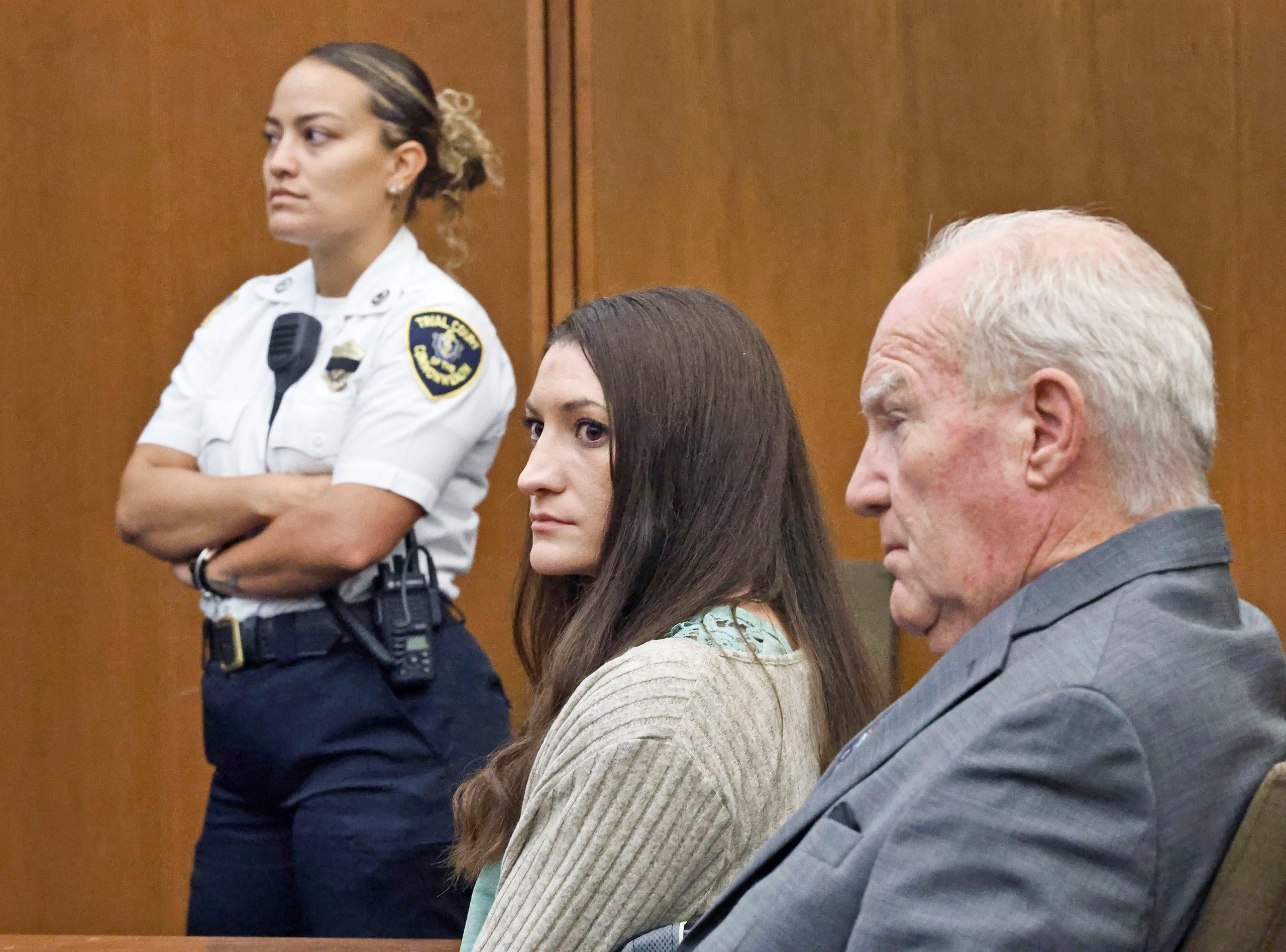
PLYMOUTH, Mass. (AP) — The deadlocked jury in the Lindsay Clancy trial started a seventh day of deliberations Friday, a day after the foreperson informed the judge that a single juror wasn’t following the court’s instructions about reasonable doubt.
The extraordinary disclosure made Thursday in the form of a note delivered to the judge offered the clearest glimpse yet of what may be keeping jurors from reaching a verdict on whether Clancy is criminally responsible for killing her three children. If jurors ultimately cannot agree on a verdict, the judge could declare a mistrial.
Clancy, a 36-year-old former labor and delivery nurse, doesn’t deny strangling her children in the basement of their home in 2023. Defense attorney Kevin Reddington blamed postpartum psychosis. Prosecutors said she knew what she was doing.
Postpartum psychosis is estimated to afflict 1 to 2 per 1,000 women after delivery. Experts at the Cleveland Clinic describe it as a mental health emergency affecting someone’s sense of reality. Though most people with postpartum psychosis don’t harm their children, mothers with severe cases may try to do so.
Here’s the latest:
Judge sends jury back into deliberations room, with one more reminder
“I wanted to remind you, as I instructed you earlier, it is your duty as jurors to accept the law as I gave it to you,” he told them. “You must follow the law as i give it to you whether you agree with it or not.”
“With that, you may now resume your deliberations.”
As for any notes from the jury room …
Sullivan acknowledged to the jury that he got a note from the jury on Thursday.
“If there are any notes in the future … make sure we don’t put down where everybody is numerically,” Sullivan told them.
Jury is seated once again
Despite a request from Reddington, Sullivan has ruled that he will not do a further inquiry of the juror.
We are in court. 7th day of deliberations
Court has reopened and reporters and the public have filed in. There is not an empty seat.
The judge is now here and lawyers are discussing further instructions to the jury.
Clancy defense motion seeks all further courtroom debate to be out in the open
Reddington filed a motion Friday requesting a standing order so there will “be no further sidebars” and that “all related proceedings will be handled in open court.”
Sullivan has often used sidebars to discuss legal issues with the defense and prosecution, especially during jury deliberations. During those sessions, no one in court can hear what is being discussed.
Clancy’s lawyer hopes to debate in open court how the judge will question the juror
Defense attorney Kevin Reddington told reporters after leaving court Thursday that the foreperson’s note identified the holdout juror to the judge.
He said he’s hoping that before the judge questions that juror on Friday, attorneys on both sides will get to argue over the specifics of that inquiry.
Reddington wants that debate out in the open, not in a private sidebar conversation.
A single juror may be preventing a verdict. The judge had them sleep on it
A deadlocked jury returns Friday for the seventh day of deliberations in the Lindsay Clancy trial, a day after the jury’s foreperson informed the judge that a single juror wasn’t following the court’s instructions about reasonable doubt.
The extraordinary disclosure made Thursday in the form of a note delivered to the judge offered the clearest glimpse yet of what may be keeping jurors from reaching a verdict on whether the Massachusetts mother is criminally responsible for killing her three children.
The jury has twice told Judge William Sullivan that it is unable to agree on a verdict. On Thursday, Sullivan brought in each juror individually and questioned them in private. The judge then reread his instructions on reasonable doubt before sending them back to continue deliberating. Soon thereafter, he sent them home.