BANGKOK (AP) — Shares mostly declined Friday in Asia and U.S. futures were little changed after U.S. inflation data showed a better-than-expected improvement in July.
Oil prices were holding steady after slipping in recent days.
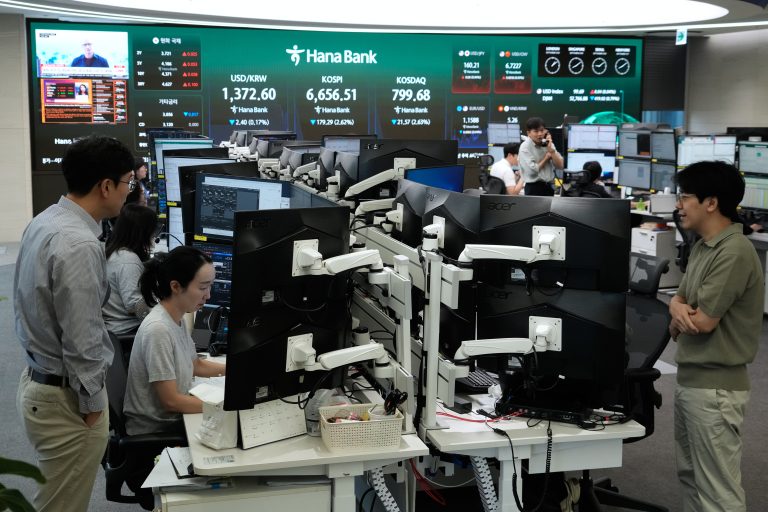
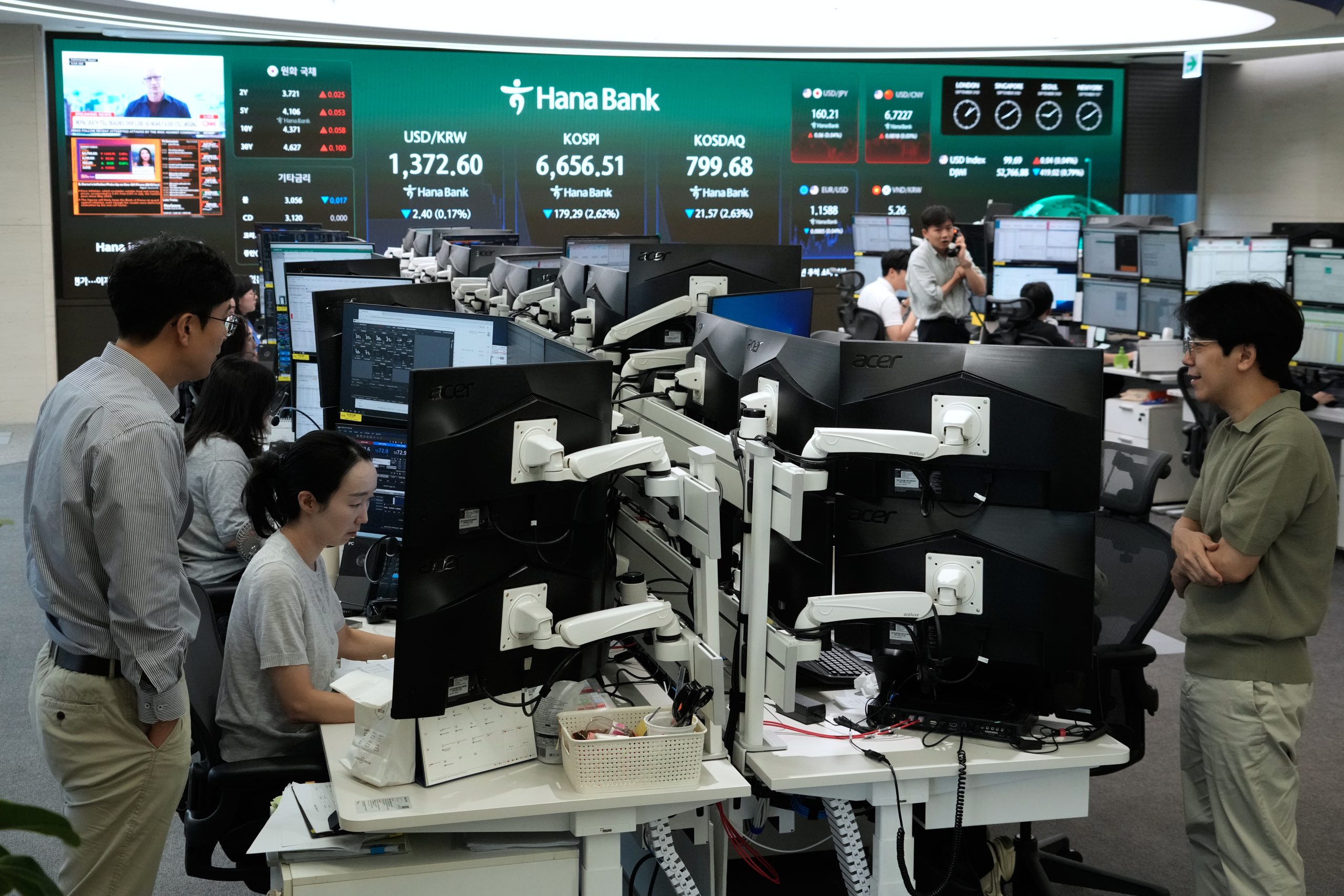
Tokyo’s Nikkei 225 index gained 0.3% to 68,533.85, while the Kospi in South Korea rose 1.3%, to 6,924.74.
In Hong Kong, the Hang Seng lost 1% to 25,137.87. The Shanghai Composite index was 0.5% lower at 3,908.05.
Australia’s S&P/ASX 200 slipped 1.1% to 9,090.90.
Taiwan’s Taiex lost 0.2% and the Sensex in India fell 0.5%.
On Thursday, the S&P 500 rose 0.7% to an all-time high close of 7,798.99. The Dow Jones Industrial Average added 0.1% to 53,839.99, and the Nasdaq composite climbed 0.8% to 26,803.03.
Wall Street relaxed after a report showed prices at the U.S. wholesale level were 4.7% higher last month than a year earlier. While that is more painful than anyone would like, it’s not as bad as June’s 5.5% inflation rate at the wholesale level, and it was slightly better than economists expected.
If inflation continues to trend that way, the Federal Reserve could decide to hold off on hikes to interest rates. Higher rates would help keep a lid on inflation, but they do so by intentionally slowing the economy and making it more expensive for everyone to borrow money.
“The disinflation ducks are starting to line up, and with oil also backing off, the market has steadily stripped away the case for another near-term Fed hike,” Stephen Innes of SPI Asset Management said in a commentary.
Any increase by the Fed would be the first in more than three years. It also could anger U.S. President Donald Trump, who has been lobbying for lower interest rates.
Oil prices eased, with Brent crude, the international standard, falling 2.1%. Early Friday, Brent was nearly unchanged at $87.06 per barrel.
It’s been swinging sharply recently, zinging between $72 and $102 in July as hopes rose and fell that Trump could set a deal with Iran that might allow oil tankers to freely exit the Middle East through the Strait of Hormuz.
A summertime holiday lull has slowed trading, but worries over oil supplies persist.
Clashes between Iran-backed Houthi rebels and government forces in Yemen have raised fears that the country’s civil war could reignite and open another front in the Middle East.
In other dealings early Friday, the U.S. dollar fell to 159.32 Japanese yen from 159.50 yen. The euro rose to $1.1543 from $1.1530.
___
AP Business Writer Stan Choe contributed.