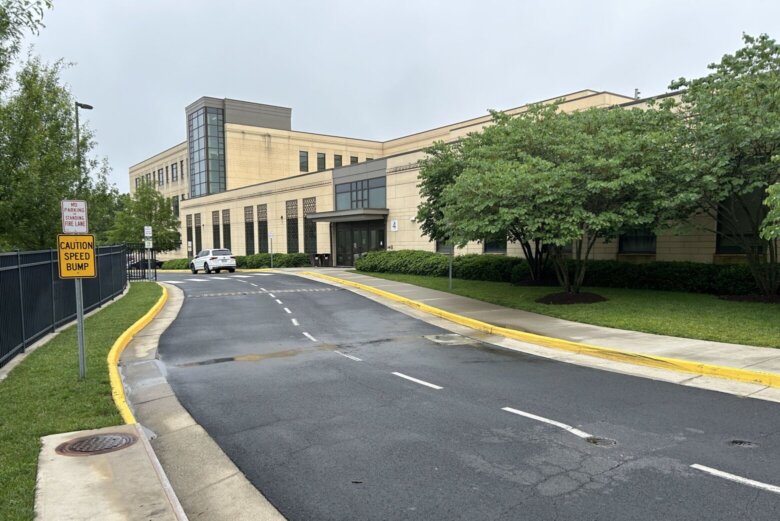
On Saturday, the Arlington County Board voted unanimously to create “School Slow Zones” around 13 schools in the county.
The new zones, a part the county’s Vision Zero Action Plan, will institute a permanent 20 mph speed limit within 600 feet of school access points.
“The recent tragic traffic fatalities in our community remind us how important it is to achieve our Vision Zero goal of eliminating serious traffic injuries and deaths,” said Arlington County Board Chair Matt de Ferranti. “These zones are one of many steps the County is taking to help road users reduce speed and increase awareness of people – usually children — walking and biking near our schools.”
Initially, 11 School Slow Zones will be installed around 13 public and private schools in the county. In neighborhoods surrounding the schools, new speed-limit signs and pavement markings will alert drivers to the reduced speed zones. Implementation of the plan is expected to take between three to five months.
Transportation staff in the county will use data from these first zones to test effectiveness of the program and make recommendations for improvement. According to the county, the following schools were selected for the initial program via three sources:
Through Vision Zero
- Hoffman-Boston Elementary School
- Gunston Middle School
- Drew Elementary School
In coordination with Arlington Public Schools
- Escuela Key Elementary School (formerly Arlington Traditional School)
- Arlington Traditional School (formerly McKinley Elementary School)
- Innovation ES (formerly Key Elementary School
- Cardinal ES (new school)
Because existing safety beacons suitable for a School Slow Zone need immediate replacement
- Tuckahoe Elementary and nearby Bishop O’Connell High School
- Glebe Elementary School
- Wakefield High School and nearby Claremont Elementary School
- St. Thomas More Cathedral School
The Vision Zero Action Plan is a strategy employed nationwide to “reduce and eliminate auto related fatalities and injuries.” The five year strategy was approved by the Arlington County Board last May and is a part of a partnership between the Arlington Department of Environmental Services’ Transportation Division, Arlington Public Schools (APS) and the Arlington County Police Department.
Arlington County cited the following statistics when announcing their decision:
One in four crashes in Arlington involves speeding.
- Every year, there are 10-plus crashes involving speeding around schools in Arlington.
- The risk of injuries and deaths increases as vehicle speeds increase.
- Children are among the most vulnerable travelers.
You can learn more about the Vision Zero Plan in Arlington here.