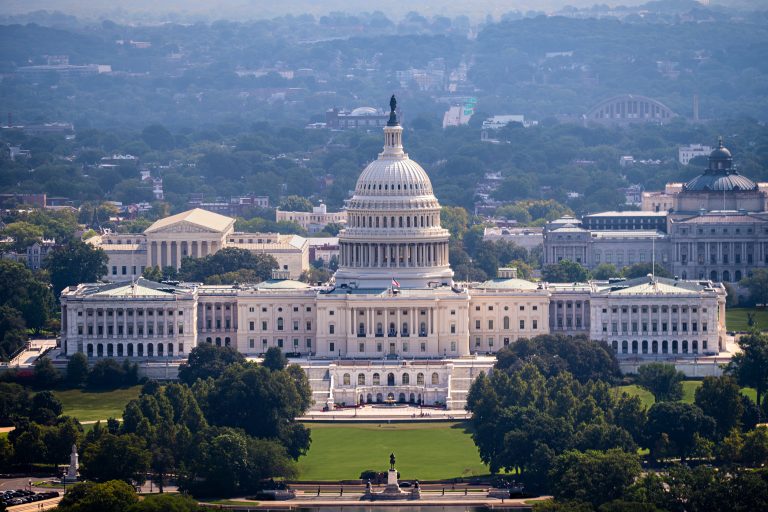
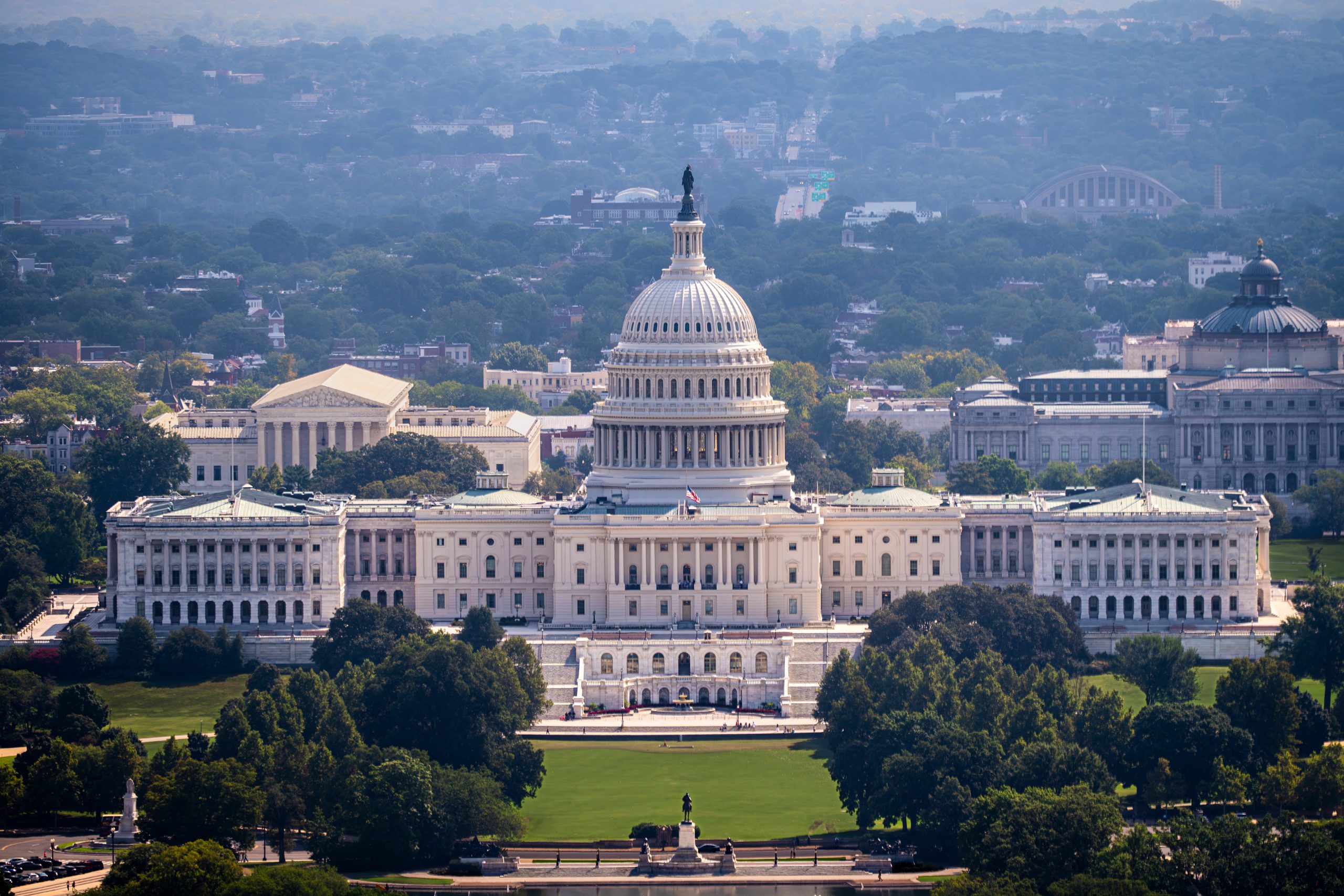
The House on Friday approved legislation to make D.C. the 51st U.S. state. The House vote, 232-180, was the first on D.C. statehood in more than a quarter-century. Minnesota Rep. Collin Peterson was the sole Democrat to oppose the bill. No Republican voted for it. Though it marks the first time the House has passed a D.C. statehood bill, the Republican-controlled Senate has no plans to take it up. The bill would establish a federal district of 2 square miles, comprising the Capitol and White House, the National Mall and other major federal buildings. The rest of the District would become a state called Washington, Douglass Commonwealth, named for the Black abolitionist and intellectual Frederick Douglass.

To view this content from @MurielBowser on X, click here.
To view this content from @ChmnMendelson on X, click here.
Mayor Muriel Bowser said in a statement, “More than 160 years ago, Washingtonian Frederick Douglass told us: Power concedes nothing without a demand. As Washingtonians and as taxpaying American citizens, we are demanding what is owed to us – the rights guaranteed to us by the U.S. Constitution.” She added, “… the issue of taxation without representation was settled more than 200 years ago through the Declaration of Independence, and disenfranchising more than 700,000 taxpaying Americans is wrong no matter our politics or demographics.” Bowser congratulated D.C. Del. Eleanor Holmes Norton, who has fought for statehood for decades. “On both a personal and professional level, this is an extraordinary accomplishment for the congresswoman, and we are all grateful not only for her tireless work on statehood, but also her commitment to uplifting D.C. residents and putting D.C. in the best position to become the 51st state.” The mayor added, “I was born without representation, but I swear – I will not die without representation.” More than 700,000 people live in D.C., more than Wyoming or Vermont. All District laws are subject to review by a congressional committee, which can veto them or alter them by attaching riders to federal appropriations bills. During GOP control of Congress, conservatives have sought, mostly unsuccessfully, to restrict some of the city’s liberal initiatives, such as needle exchanges for drug users and abortions under its Medicaid program.
‘Disenfranchised and shortchanged’
Passionate debate from lawmakers representing several states preceded the historic vote. Norton initiated the debate on her bill, H.R. 51. “The United States is the only democratic country that denies both voting rights, in its national legislature and local autonomy, to the residents of its nation’s capital,” she said on the House floor. As a state, D.C. would be one of seven with populations under 1 million, she said. The city’s $15.5 billion annual budget is larger than those of 12 states, and D.C.’s triple-A bond rating is higher than those of 35 states, Norton said. Top Democrats joined Norton in urging lawmakers to vote for the measure, arguing that it is time to end taxation without representation. Norton, while she has limited voting privileges in certain situations, does not have a vote that counts on the House floor. House Speaker Nancy Pelosi praised Norton’s work on the legislation, calling her “relentless, persistent, dissatisfied about the lack of full participation for her constituents.” House Majority Leader Steny Hoyer, of Maryland, who for many years held off on formally endorsing D.C. statehood, spoke on the floor with a mask that included a map of the District that statehood supporters have distributed. “The people who call our nation’s capital home have been disenfranchised and shortchanged for too long,” Hoyer said. But Republicans, including Maryland Rep. Andy Harris, argued against statehood. “This is not Congress’ land. This is Maryland’s land,” Harris said, his voice rising. “Maryland gave it to the United States for the sole purpose of a permanent federal enclave.” The District of Columbia was created from landed originally ceded by the states of Maryland and Virginia. Rep. Gerry Connolly, D-Va., said it is time for neighboring residents in D.C. to receive full representation in Congress, and countered arguments to cede the District back to Maryland. “Two problems: Maryland doesn’t want D.C., and D.C. doesn’t want to be in Maryland,” he said. “The consent of the governed is a fundamental part of the American architecture, which you conveniently overlook.” Republicans argue that a constitutional amendment would be needed to make D.C. a state, which Democrats counter is unnecessary. Lawmakers on both sides agree that politics plays a big role — as everything does in Washington — in the battle over whether to make D.C. a state. “What this is really all about is an attempt to get two more Democratic senators,” said Rep. Jody Hice, R-Ga. The legislation calls for D.C. to also get a voting member of the House of Representatives. Even with the expected House passage of the measure, D.C. will be a long way from becoming a state. The Republican-controlled Senate has no desire to take up the legislation. Still, Sen. Chris Van Hollen, D-Md., called for Senate Majority Leader Mitch McConnell to take up the legislation, saying in a statement the leader “must immediately bring this bill up for Senate consideration. It’s time for Republicans to stop treating the citizens of the District of Columbia as second-class citizens and recognize their constitutional rights as Americans.” Van Hollen also noted that D.C.’s status has already cost it, and recently: The District was treated as a territory, rather than a state, in the apportionment of federal COVID-19 relief money, costing it about $700,000. Democrats are hoping they can retake the Senate, as well as the White House, this fall, to give the legislation a chance. The last time the House voted on statehood, in 1993, the bill overwhelmingly failed by a vote of 277-153. Though Democrats controlled both the House and the Senate in 2009-2010, when President Barack Obama was in the While House, statehood legislation made little progress. Statehood supporters say that recent protests near the White House and the forceful response from President Donald Trump has raised awareness across the country about the issue. The Associated Press contributed to this report.