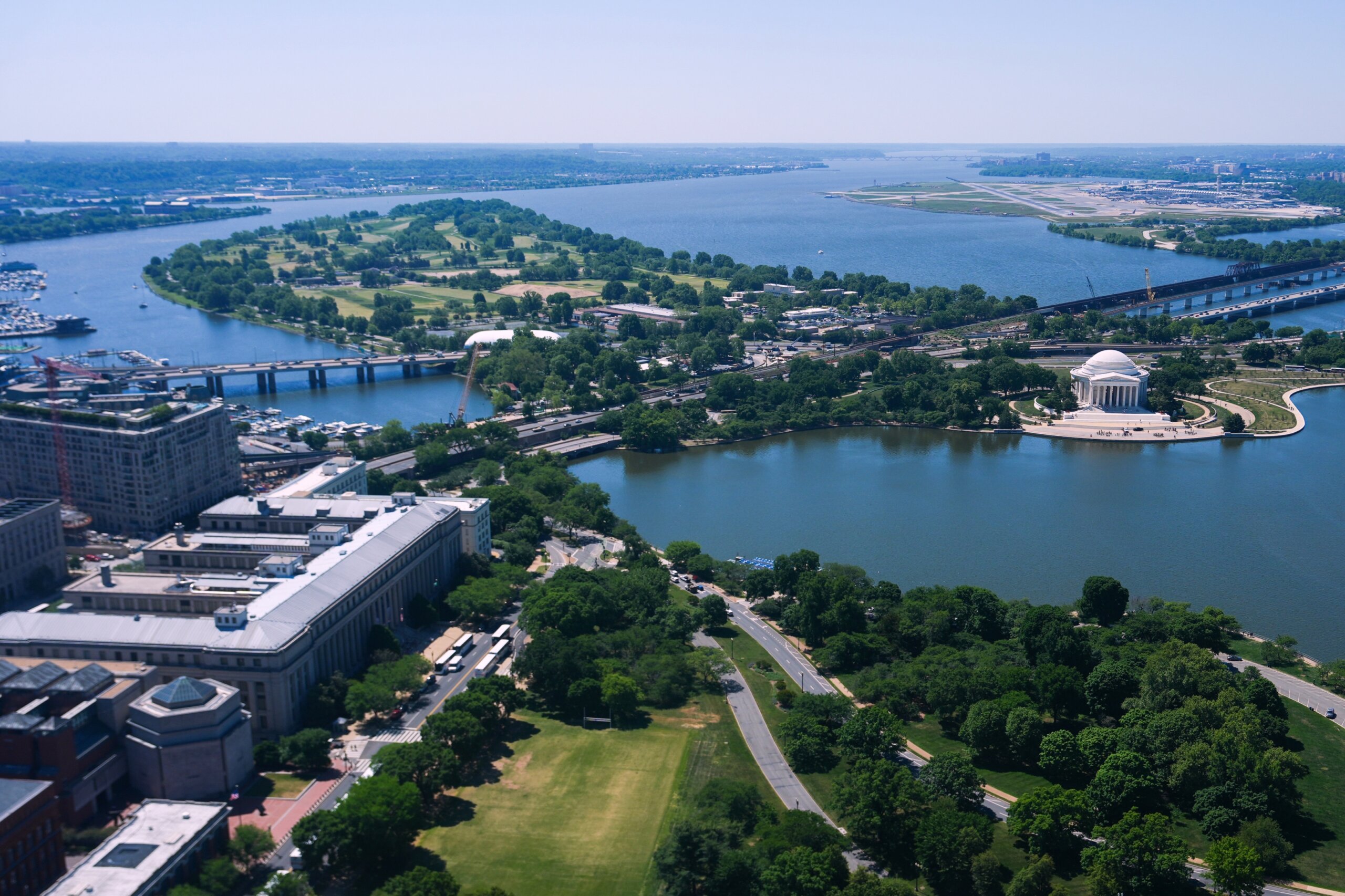
D.C.’s iconic cherry blossoms are predicted to reach peak bloom between March 22 and March 25. The announcement was made by Jeff Reinbold, superintendent of the National Mall and Memorial Parks for the National Park Service, during a news conference with D.C. Mayor Muriel Bowser Wednesday morning. Peak bloom denotes when 70% of the famous Yoshino cherry trees along D.C.’s Tidal Basin are in full pink-puffy bloom. This year’s projected date is about two weeks ahead of the average peak bloom date of April 4.

To view this content from @NickWTOP on X, click here.
Just a few hours after the announcement of predicted peak bloom, park service officials also revealed the cherry trees along the Tidal Basin had progressed to the “florets visible” stage of development — the second of six stages the trees go through to reach full bloom. Park service official said predicting peak bloom was made more difficult this year due to warmer-than-average temperatures and recent weather swings.
To view this content from @NationalMallNPS on X, click here.
“Emerging from the warmest winter on record, this has been a particularly challenging year to read the trees and to project peak bloom,” Reinbold said. Because of the warm winter, the trees never reached winter dormancy, Reinbold said, which is the starting point for calculating when the blooms will emerge. In addition, an indicator tree used to gauge blossom development is giving off mixed signals, Reinbold said. “Our natural resource manager likened … our indicator tree to a teenager: There’s a lot going on there. The indicator tree is showing us several different phases of blossoms.” Last week, the annual cherry blossom watch officially kicked off when, on the same day the region saw record-setting 80-degree temperatures, the first trees started to bud, marking the first of six stages on the way to peak bloom. Two days later, temperatures plummeted and D.C. saw a dusting of light snow.
National Cherry Blossom Festival begins March 20
Millions of visitors are expected in D.C. this spring to peep at the blossoms. New signs this year will implore visitors to treat the trees with care. “We’ll be helping visitors understand how they too can help us protect the trees,” Reinbold said. “You’ll find new signs around the Tidal Basin with tips for protecting the trees.” In addition, visitors who pledge to help care for the trees will receive a “Cherry Blossom Protector” button. The earliest peak bloom recorded in D.C. was March 15 in 1990, according to the National Park Service. The National Cherry Blossom Festival runs from March 20 through April 16. The four-week festival includes an opening ceremony, parade, kite festival, and Cherry Blossom Ten-Mile Run and 5K. You can see the full list of events on the National Cherry Blossom Festival website. “The Tidal Basin is the main event for the cherry blossoms. But as you move around the city and all eight wards, you will see beautiful blossoming trees and events to celebrate the festival,” Bowser said. WTOP’s Nick Iannelli contributed to this report.