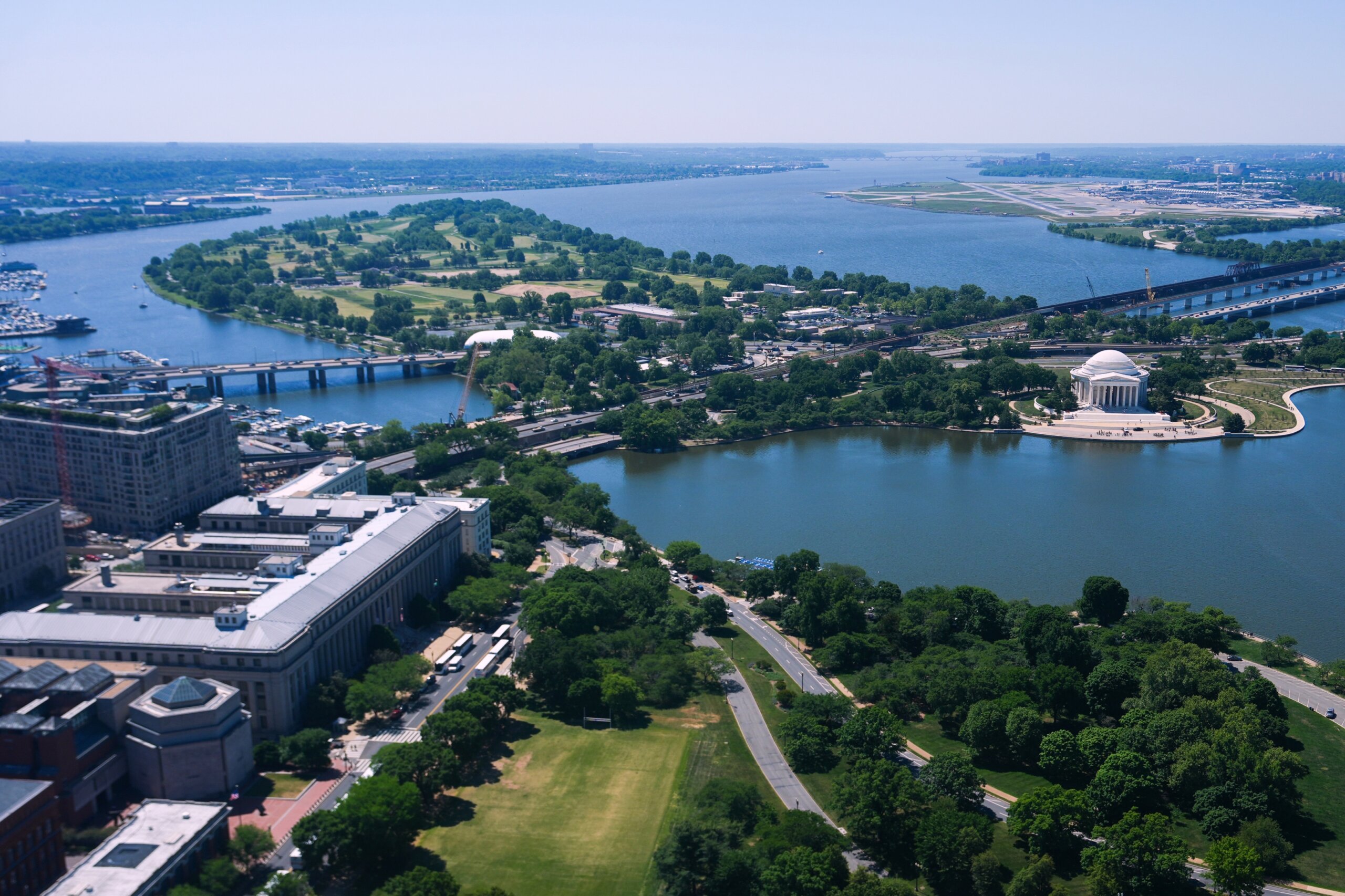
The National Park Service is exploring eliminating the one-way reversible lanes in place during morning and evening rush hours along Rock Creek and Potomac Parkway in D.C., citing crash data and safety concerns.
In an 81-page Transportation Impact Assessment, completed with the U.S. Department of Transportation, the agency reviewed the possible implications of ending the reversible lanes.
For one, reorganizing traffic flow and patterns requires U.S. Park Police time and resources, the report said, and sometimes may put officers in vulnerable positions along the road.
The current one-way reversible lanes “do not conform to modern federal traffic standards,” the report said, and they could sometimes be difficult for drivers to navigate.
The reversible one-way operations have been in place since the 1930s, with the goal of easing congestion as commuters enter and leave the city. They’re in effect on weekdays, with the exception of federal holidays, allowing southbound traffic entering the city to use all four lanes from 6:45 a.m. to 9:30 a.m., and northbound traffic exiting D.C. to use all four lanes in the afternoons from 3:45 p.m. to 6:30 p.m.
About 7,500 cars drive along the parkway during each of the reversible periods, the report said, as do almost 50,000 vehicles on weekdays.
The report is tied to the National Park Service’s efforts to create an environmental assessment for safety improvements along part of the parkway, an NPS spokeswoman said. One of the safety improvements the environmental assessment will consider is ending one-way traffic operations during rush hours.
The rate of crashes occurring during one-way reversible operations is “disproportionately higher” than the rate of those that happen when they’re not in effect, the report said.
The findings suggest that doing away with reversible lanes would prompt drivers going in the “predominant direction of commuter travel” to shift routes to “parallel corridors.”
Similarly, traffic delays resulting from doing away with reversible operations “could be largely mitigated through geometric and operational changes along the RCPP corridor,” according to the report.
Reversible lanes ended along Connecticut Avenue in 2020, and the report said eliminating them along both commuting corridors would likely encourage drivers to choose “alternate modes of transportation or rely on the regional highway network instead of cutting through neighborhoods.”
Eliminating the reversible lanes, the report said, would make the roadway safer for drivers and Park Police staff and decrease congestion for reverse commuters.
The National Park Service will start collecting public feedback for the environmental assessment this winter, the spokeswoman said. The agency has already started communicating with local agencies and elected officials.
The environmental assessment will focus on safety upgrades on Rock Creek Parkway between the Beach Drive NW/Shoreham Drive NW intersection in Rock Creek Park to the north, to the Ohio Drive NW/E Street NW Expressway intersection to the south, the spokeswoman said.
The safety upgrades it will look into include:
- Widening the multiuse trail between P Street NW and Virginia Avenue NW
- Ending one-way traffic operations during rush hours
- Improving traffic flow at key intersections
- Adding center-lane safety measures south of P Street NW
- Rehabilitating the parkway pavement
- Replacing missing streetlights
- Repairing damaged guardrails
Get breaking news and daily headlines delivered to your email inbox by signing up here.
© 2024 WTOP. All Rights Reserved. This website is not intended for users located within the European Economic Area.