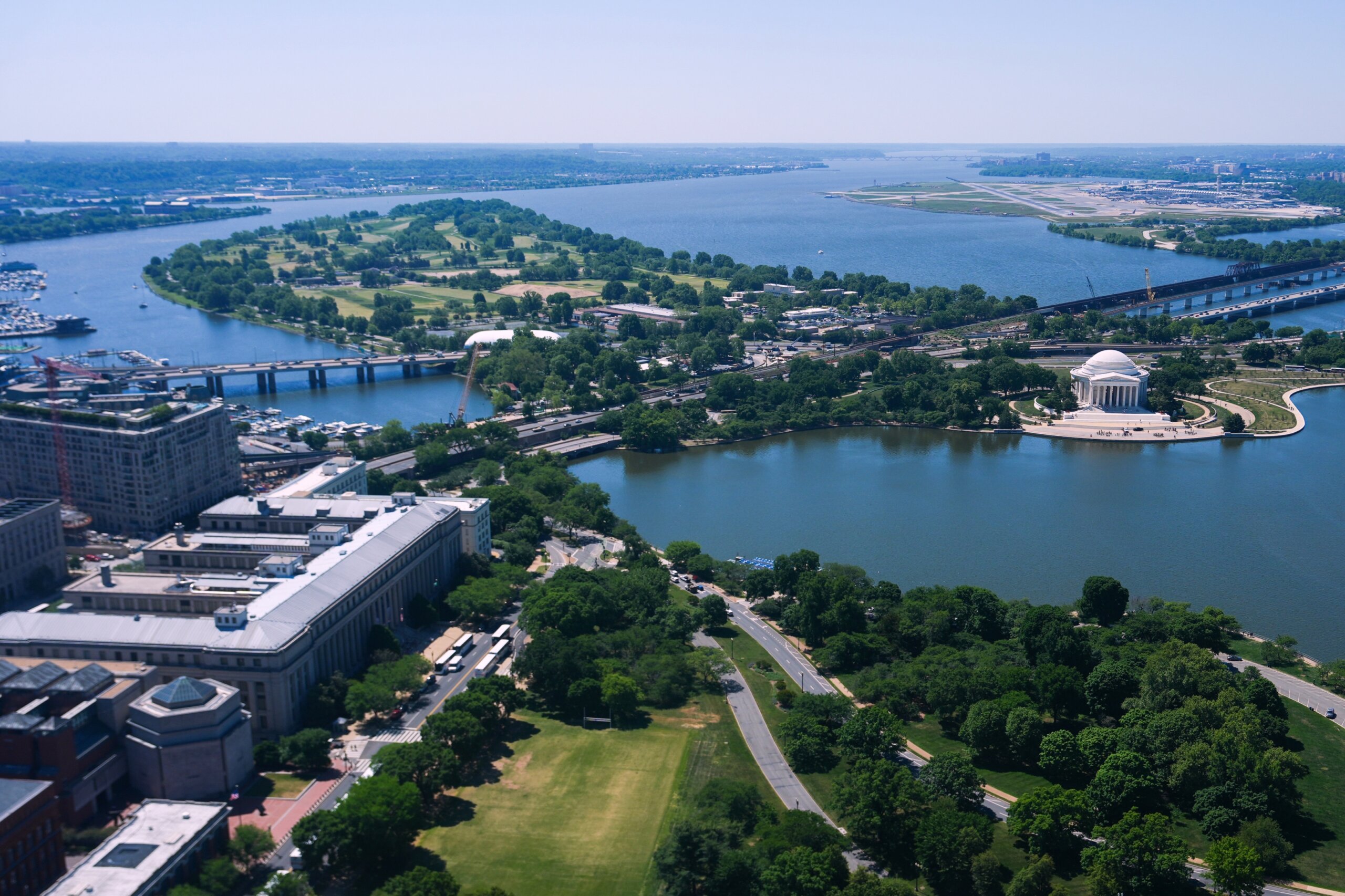
The relatively mild months of January and February have accelerated the emergence of peak bloom for the the cherry blossoms along the Tidal Basin.
While a chilly March might slow things down, local scientists have been clear that the earlier arrival of peak bloom is another indication of climate change.
But the signs are there even when we’re not staring closely at the color and shape of the buds on the trees. All you have to do is look at the waters of the Tidal Basin.
“Now it’s encroaching and the trees are finding themselves submerged in water, the roots, like twice a day,” said Matthew Morrison, an arborist for the National Park Service.
Added NPS spokesman Mike Litterst, “It spills over. We’ve had to remove some cherry trees because they’re constantly inundated with water.”
Now to be fair, it’s happening not just because waters are rising. The sea walls around the Tidal Basin and West Potomac Park are also sinking, and have been almost since they were installed decades ago.
“The Tidal Basin sea wall was not anchored in bedrock,” said Litterest.
But a $120 million plan is in place to change that. A new sea wall will be installed on the Tidal Basin and West Potomac Park — anchored into bedrock so it doesn’t sink. It will also be elevated in some spots, similar to parts of the sea wall that have been repaired near the Jefferson Memorial.
“We’re going to shore it up, we’re going to raise it to help us deal with the effects we’re seeing of rising sea level,” Litterst said. “We’re going to widen the walkway as well so that during cherry blossom season there’s more room for pedestrians, more room for them on the walkway and try to keep them off the roots of the trees.”
Protecting those roots is important because the waters that are rising aren’t necessarily what you’d want watering the trees to begin with.
“We’ve also been trying to monitor the saline content of the water and see if we have any brackish water coming up this way. Because as the waters rise, the brackish water and the salt water starts finding its way further and further upstream,” said Morrison.
Why is he worried?
“We know that there’s crabs found just downstream here which have never been in that area and they need salt water,” Morrison said. “It tells us it’s kind of coming — it’s on its way.”